

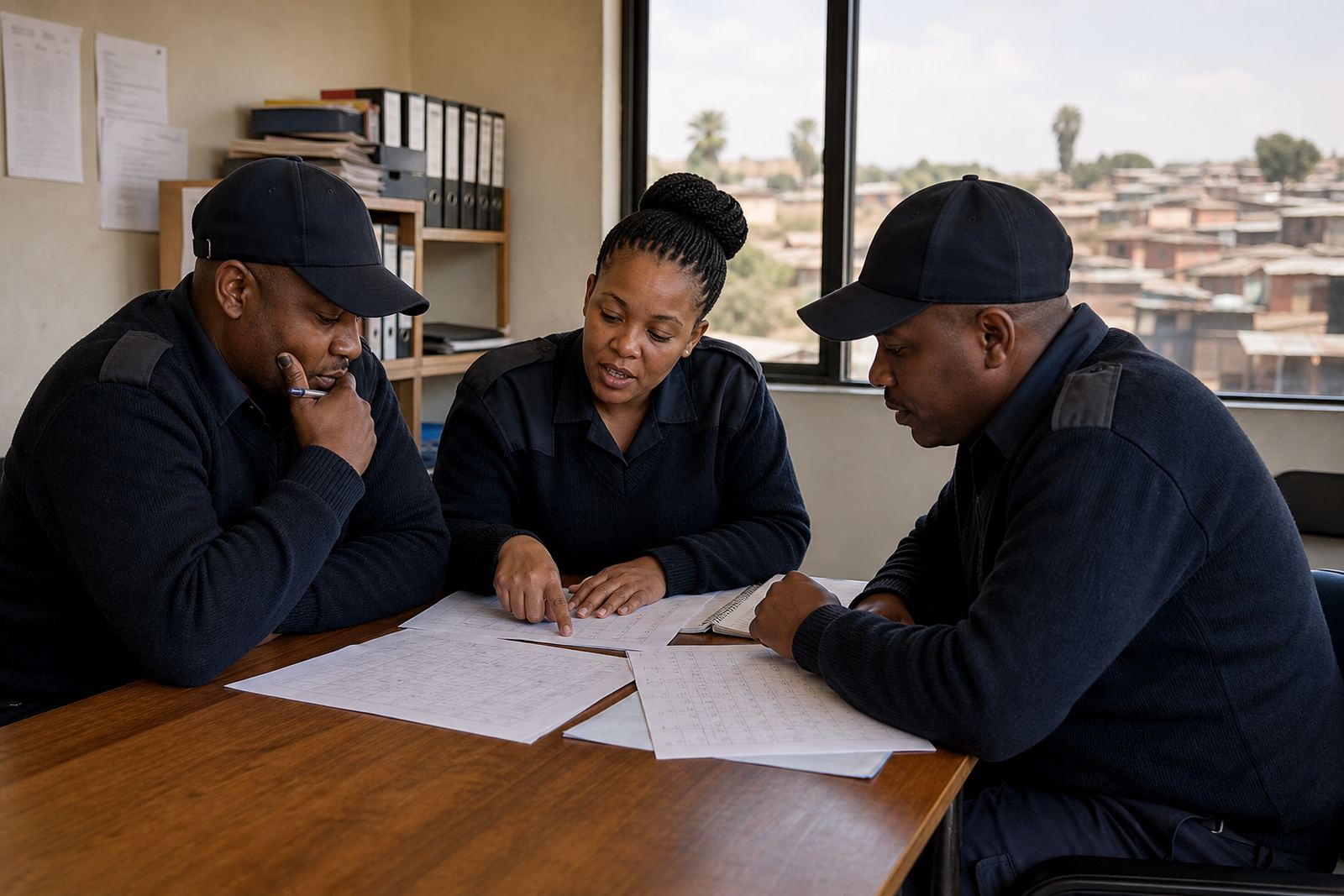
The guarding team needed better shift visibility
The client was a guarding team based in Soweto, serving sites where night work, early starts and last minute changes were part of the job. Their supervisors were dealing with paper notes, WhatsApp messages and spreadsheets that did not always match, so it was easy for a guard to arrive with the wrong shift details or miss a handover note. That sort of gap causes trouble fast when a site is busy after dark.
The brief was simple in principle but tight in practice. They wanted a cleaner way to plan shifts, manage swaps, send messages and keep team activities in one place. They also needed rosters that could be checked against basic labour rules, including proper rest periods and fair planning under the Basic Conditions of Employment Act, without turning every change into a long admin task.
What was holding the roster back
The team worked with changing site needs, night patrols and a mix of permanent and relief guards. Load-shedding also made timing more sensitive because some handovers happened in low light, and supervisors could not rely on everyone having the same information at the same time. On top of that, some staff were mobile first users and others preferred simple text style updates, so the communication method had to be easy to follow.
- Shift changes were sometimes shared too late
- Handover notes lived in different places
- Swap requests were agreed by message but not always recorded
- Training and site activity updates were not easy to track
There was also pressure to keep the process practical for supervisors on the ground. They needed something that would suit a busy Johannesburg operation, not a complicated admin system that only one person understood. That meant keeping the workflow straightforward, with clear steps for planning, messaging and approval.
How we set up the shift process
We worked with the client over a 4 week rollout. The first stage was account setup and roster template setup, followed by team import help and manager training. After that, we supported staff training, message setup and swap process help so the team could use the system properly from the start, not half way through a busy week.
The roster structure was built around the client’s actual shift pattern, including day duty, night duty and relief cover. We also helped align the process with their internal policies and the general requirements of the Basic Conditions of Employment Act, so managers had a clearer view of working hours and rest periods before approving changes.
- Roster template setup for weekly shift planning
- Message setup for supervisor and team updates
- Swap process help for quick shift cover requests
- Activity planning help for briefings, patrol notes and handovers
Keeping night shifts and handovers in one place
The main improvement was visibility. Supervisors could see who was on duty, who was swapping and what needed to be handed over before the next shift. That meant fewer mixed messages at the gate or in the control room, and it became easier to check who had seen the update. For a security team, that kind of clarity matters because a missed note can affect the whole site, not just one person.
We also helped the team set up a simple routine for end of shift notes and activity planning. Guards could follow the same process each time, which made the handover cleaner and easier to read. There was still flexibility for last minute changes, but the team was no longer relying on memory alone. One supervisor told us the rosters felt much easier to follow once the same format was used every week, which is exactly what they needed.
Results after the rollout
By the end of the rollout, the client had a clearer view of night duty coverage and a more organised way to handle handovers. Shift swaps were easier to track, supervisors spent less time piecing together messages, and the team had one place to check the plan for the week. It also helped with training new staff because the routine was easier to explain and repeat.
- Better visibility of night shifts and relief cover
- Clearer handover notes for each duty change
- Less confusion around shift swaps and approvals
- More consistent communication between supervisors and guards
The biggest gain was time. Supervisors could spend more of the shift managing the site and less time chasing missing information. For a guarding team in Soweto, that kind of admin saving has a real effect on the day to day flow.
What we would repeat on another security site
If we were setting this up again for another security team in Johannesburg, Cape Town, Durban, Pretoria or Bloemfontein, we would use the same practical approach. Start with the roster pattern on site, keep the message flow simple, and make sure the swap process is easy enough for supervisors and guards to use under pressure. That keeps the system useful from week one instead of turning it into extra admin.
We would also keep the handover routine tightly linked to the roster so the people doing the shift can see what matters before they clock in. For security work, that connection is important. It means fewer gaps, fewer crossed wires and better visibility when the night gets busy and the phones start buzzing.
- Start with the real shift pattern, not a generic template
- Keep the handover note format short and consistent
- Train supervisors first, then the wider team
- Review the roster against internal policy and labour rules
Key facts
| Project | Soweto Security Team |
|---|---|
| Town | Soweto, Johannesburg |
| Client type | Guarding team |
| Timeline | 4 weeks |
| Core setup | Roster template setup, team import help, manager training, staff training |
| Key outcome | Clearer night shift visibility and handover notes |