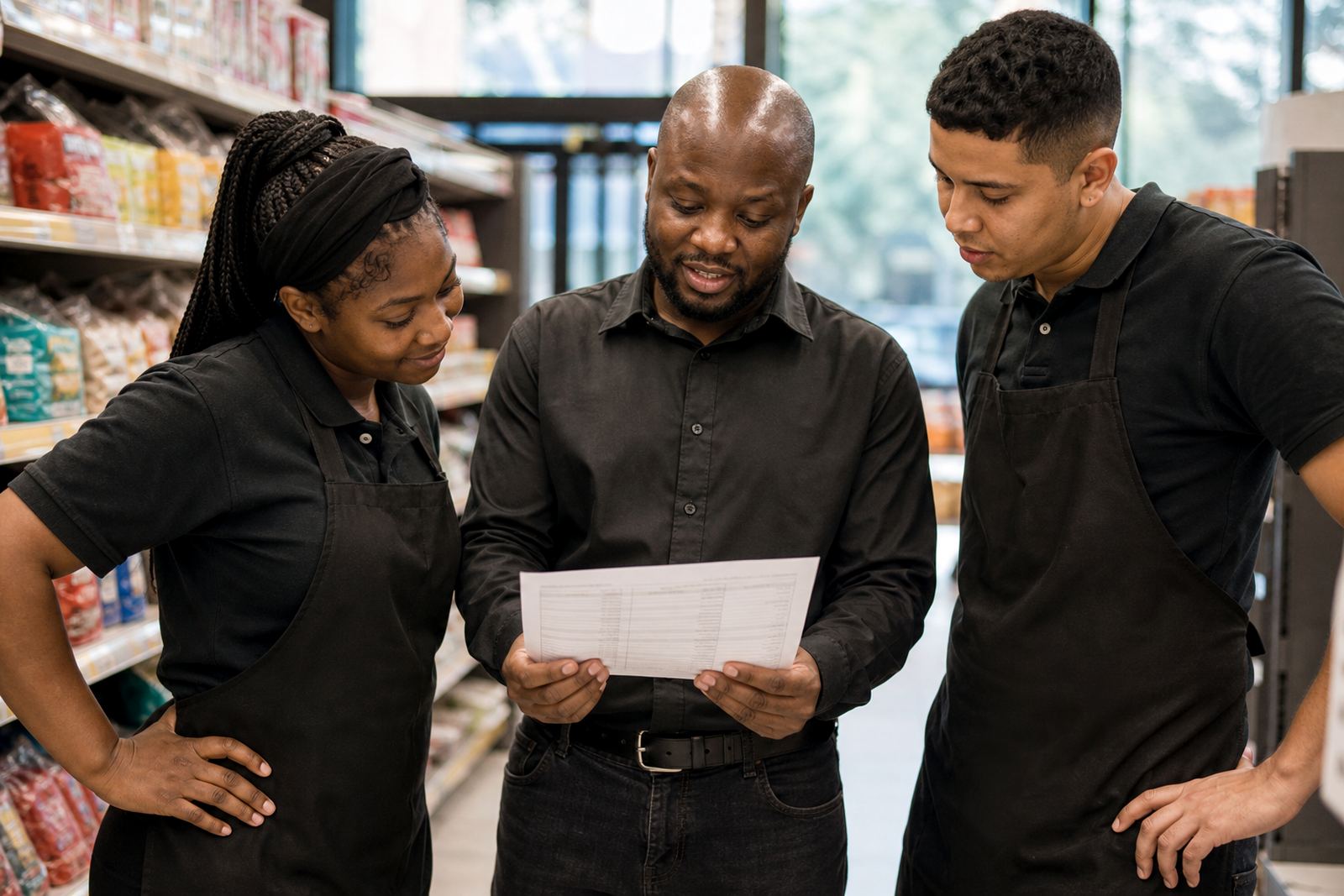


Why hospitality rosters need tighter control
Restaurants, hotels, lodges and event venues rarely run on the same rhythm every week. Public holidays, school holidays, functions, weather, supplier delays and load-shedding can change staffing needs with very little notice. A roster that looked fine on Monday can be wrong by Wednesday afternoon.
In hospitality the issue is not only filling a shift, it is keeping the whole team informed. Front of house, kitchen, housekeeping, bar staff and supervisors all need different hours and different instructions. If one person misses a change, the whole service can feel it. Clear scheduling, simple shift swaps and team messaging help reduce confusion and cut down on calls, WhatsApp chains and paper notes that get lost.
Rosters should also follow the Basic Conditions of Employment Act in general terms, including working hours, rest periods and overtime arrangements. Businesses still need to check their own policies and labour rules, but a proper roster setup makes it easier to stay organised from the start.
What a hospitality team usually needs in the room
Most hospitality teams do not need a complicated setup. They need a practical way to view shifts, send updates and keep activity notes in one place. In a head office or on site, the typical equipment set is simple and usually already available.
- A reliable internet connection in the office or manager’s area
- A laptop or benchtop computer for roster planning and approvals
- Smartphones for managers and supervisors who move between floors or sections
- A shared printer if you still need printed weekly rosters for notice boards
- Basic backup power for short outages, especially during load-shedding
For coastal towns like Durban, humidity and salt air can also be hard on devices, so it helps to keep equipment in a dry, secure room. In busier venues, a tablet at the manager station can work well for quick checks during service. The main point is not the hardware, it is making sure the team can see the latest roster without hunting through messages or old printouts.
How to plan shifts for service, prep and peak times
A good hospitality roster starts with the service pattern, not just the staff list. Weekends, pay weekends, tourist periods and private events often need extra hands in specific areas. A breakfast shift in a hotel has different pressure from a Friday dinner service in a restaurant, and a banquet setup needs its own staffing plan. Managers should map the week by service block, then assign people to the right section and skill level.
It also helps to keep the roster readable at a glance. Avoid crowding too much detail into one view. Separate kitchen, floor, bar, housekeeping or front office views where needed. If a team member changes from breakfast to evening duty, that change should be easy to spot. Clear labels reduce late arrivals and help supervisors balance opening, mid and closing shifts better.
- Build the roster around trading hours and expected footfall
- Mark leave, training and special events before filling normal shifts
- Keep a list of approved cover staff for weekends and public holidays
- Use one clear message when a shift changes, not several scattered updates
Common mistakes that make hospitality rosters harder
One common mistake is treating every week like a normal week. Hospitality is too variable for that. If managers only copy last week’s roster, they miss event bookings, weather changes, short-term sickness and supplier delays. Another mistake is leaving swap requests to verbal arrangements. When a shift swap is agreed in passing but not recorded properly, someone can still arrive at the wrong time or the wrong section.
A second problem is poor communication between managers. A venue may have one plan for the kitchen and another for front of house, which creates gaps during service. It is also easy to overload one senior staff member with all the changes. That slows down approvals and leads to missed messages. Keep the process simple, with one place to record changes and one person responsible for confirming them.
Lastly, do not forget training. New supervisors often need help reading rosters, managing messages and setting up team activities without confusion. A short training session is usually more useful than a long manual that nobody reads.
Budget ranges for hospitality teams
Budgets vary depending on the size of the team and how many branches or service areas need to be managed. A small restaurant may only need a straightforward roster process with basic setup help, while a hotel or multi-site hospitality group may need more structure for departments, managers and training. It is better to budget for setup and support properly than to fix repeated mistakes every month.
As a practical guide, many hospitality businesses in South Africa look at a setup budget in the range of R3,500 to R12,000 for smaller team structures, depending on the work involved. Larger operations with multiple managers, more staff sections or site rollout support may need a budget from R12,000 to R35,000 or more. Ongoing check-ins, training and process support can be planned separately. These figures are only a guide and the final cost depends on how much help is needed with rostering, messaging and activity planning.
When comparing costs, look at the time saved by managers and the fewer mistakes on the floor. If the roster is clear and the team knows what is expected, service runs better and changes are easier to manage.
How OurTeam supports hospitality operations
OurTeam works with hospitality businesses across South Africa, from Johannesburg and Sandton to Cape Town, Durban, Pretoria, Bloemfontein and Midrand. The focus is practical support for scheduling, shift swaps, messaging and team activities. That includes account setup, team import help, roster template setup, manager training, staff training, site rollout, policy alignment, swap process help, message setup, activity planning help, go live support and ongoing check-ins.
The team at OurTeam is based in Rosebank, Johannesburg, and includes Thabo Mokoena as Managing Director, Ayesha Naidoo in Operations, Lerato Molefe in Client Success, Johan van der Merwe in Implementation, Nomsa Dlamini in Training and Michael Petersen in Support. Businesses usually reach out through the enquiry form on the contact page, then work through the setup steps in a way that fits their operation.
For hospitality teams, the main goal is simple: fewer surprises, clearer rosters and faster communication between managers and staff. That makes it easier to handle the busy parts of the week without losing control of the basics.